What If the Insurance Company Denies My Car Accident Claim in Shreveport?

A denial is not the end of your claim. It is the insurer’s position, and positions can be challenged. Your options include requesting the denial in writing, correcting whatever the insurer says is missing, pursuing other available coverage, filing a complaint with the Louisiana Department of Insurance, and filing suit before the two-year deadline runs.
Denials are often based on incomplete information or a disputed fault call rather than a real coverage problem. Here is how to respond to one.
Why Do Insurance Companies Deny Car Accident Claims?
Most denials trace back to a handful of reasons:
- Disputed fault. The insurer says its driver was not responsible, or that you were mostly to blame.
- Disputed causation. The insurer claims your injuries came from something else, such as a prior condition.
- Coverage problems. A lapsed policy, an excluded driver, or an unlisted vehicle.
- Late reporting. You waited too long to notify the insurer.
- Treatment gaps. A delay between the crash and your first medical visit, which matters even when symptoms appear days later.
- Insufficient documentation. The file lacks records the adjuster says it needs.
- Policy limits already exhausted by other claimants.
Causation denials have become more common. Louisiana eliminated the presumption that a crash caused a previously healthy person’s injuries when House Bill 450 took effect May 28, 2025. Insurers now push causation harder because the law requires you to prove it.
What Should You Do First After a Denial?
Move deliberately rather than emotionally.
- Get the denial in writing, including the specific reason and the policy language relied on.
- Request a copy of your policy if the denial is coverage-based.
- Read the stated reason carefully. A denial for missing documentation is a very different problem from a denial on fault.
- Gather what is missing, whether that is medical records, wage documentation, or repair estimates.
- Preserve evidence such as photos, video, and witness contacts.
- Do not give a new recorded statement to fix the problem without advice.
- Note your deadlines, because the denial does not pause them.
Ask for the adjuster’s reasoning in writing every time. A denial that cannot be explained in writing often does not survive scrutiny.
Can You Appeal a Denied Car Accident Claim in Shreveport?
You can dispute it, though auto claims do not have the formal appeal process health insurance does.
Practical routes include:
- Submitting additional evidence and asking for reconsideration
- Escalating to a supervisor or claims manager
- Filing a complaint with the Louisiana Department of Insurance. Louisiana’s policyholder bill of rights confirms the right to file a complaint against an insurer, producer, or adjuster and have it investigated by the department.
- Filing suit, which is often what actually changes an insurer’s position
A regulatory complaint does not force payment, but it creates a record and sometimes prompts a second look.
What Other Coverage Might Pay?
When the at-fault driver’s insurer denies or has no coverage, look at your own policy.
Uninsured and underinsured motorist coverage exists exactly for this. It is also the answer when the other driver has no insurance at all. Under Revised Statute 22:1295, UM coverage is automatically included in a Louisiana policy at limits equal to your bodily injury liability limits unless you rejected it in writing on the form the Commissioner of Insurance prescribes. Louisiana courts require that rejection to be clear and unmistakable, and defective forms have been invalidated, restoring coverage the insurer believed was waived.
So check your declarations page before assuming you have nothing. Medical payments coverage, if you carry it, can also help with treatment costs regardless of fault.
Is a Denial Ever Bad Faith?
Sometimes, but the framework changed and most online articles have not caught up.
Effective July 1, 2024, Louisiana repealed Revised Statute 22:1973 and folded insurer good faith duties into Revised Statute 22:1892. The old penalty of up to twice the damages sustained no longer exists.
Under current law, an insurer owes its insured a duty of good faith and fair dealing, with an affirmative duty to adjust claims fairly and promptly. Insurers generally must pay a claim due to an insured within 30 days of receiving satisfactory proof of loss. Where a failure to pay is arbitrary, capricious, or without probable cause, penalties can reach 50 percent of the amount owed, or $5,000, whichever is greater, plus proven economic damages, attorney fees, and costs.
The distinction that matters: those duties run to the insurer’s own insured. If your own carrier is denying a UM claim, this is squarely relevant. Against the other driver’s insurer, your remedy is generally the underlying injury lawsuit rather than a bad faith claim.
An insurer is also allowed to deny a claim it genuinely disputes. A denial becomes a problem when it lacks a reasonable basis, not merely because you disagree with it.
How Long Do You Have to Take Action in Shreveport?
You generally have two years from the crash to file suit under Civil Code article 3493.1.
Negotiating with an adjuster does not extend that deadline. If the insurer is dragging its feet rather than denying outright, see what to do when an insurance company stalls. Neither does an appeal or a regulatory complaint. Insurers are not obligated to remind you, and a claim that becomes time-barred loses all its value.
FAQ
Can I sue after my claim is denied?
Yes. A denial does not prevent a lawsuit against the at-fault driver, as long as you file within the deadline.
Should I accept a partial payment?
Be careful. Confirm in writing what the payment covers and whether accepting it releases anything.
What if the other driver had no insurance?
Your own uninsured motorist coverage may respond. Check whether any waiver of that coverage is even valid.
Does complaining to the state force them to pay?
No, but it creates a record and prompts a response to the department.
How much does it cost to challenge a denial?
Injury firms typically work on contingency, so there is no upfront cost and no fee unless there is a recovery.
Turning a Denial Around for Shreveport Car Accident Claims
A denial letter is one company’s opinion written by someone with a financial interest in the outcome. It is not a ruling, and it is frequently wrong about fault, causation, or what your policy actually says.
If your claim was denied, let our Shreveport car accident lawyers review the letter and your policy, identify every source of coverage, and respond. Contact the firm for a free case review while your deadline is still intact.
Author Bio
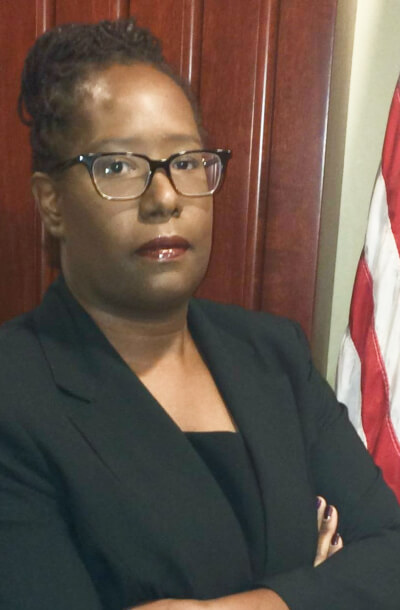
Heather C. Ford is the founder and Managing Attorney at Ford Injury Firm, a reputable Shreveport-based law firm focused on personal injury, traffic violations, and misdemeanor cases. A proud Louisiana native, Heather earned her bachelor’s degree in Chemistry from Dillard University before obtaining her Juris Doctor from Loyola University New Orleans.
At Ford Injury Firm, Heather leverages her extensive knowledge of Louisiana law to offer personalized and aggressive representation to clients facing a range of legal challenges. Whether dealing with the aftermath of car, truck, motorcycle, or pedestrian accidents, or addressing traffic-related charges such as speeding tickets and DUI/DWI offenses, Heather is dedicated to protecting her clients’ rights and securing the best possible outcomes.