How Do I Prove the Other Driver Was at Fault in a Shreveport Car Accident?

To prove the other driver was at fault in a Shreveport car accident, you have to show four things: the driver owed you a duty of care, they breached it, that breach caused your injuries, and you suffered real losses. The proof comes from evidence, not opinions. Photos, video, witness statements, vehicle damage, medical records, and, in some cases, a violated traffic law that creates a presumption of fault in your favor.
Fault matters more in 2026 than it used to. Louisiana now bars recovery entirely for anyone found 51 percent or more at fault, so the percentage assigned to you is no longer just a discount. Here is how fault actually gets proven.
What Do You Have to Prove to Win a Fault Claim?
Your right to recover comes from Civil Code article 2315, which says a person whose fault causes damage to another must repair it. Courts break that into elements you must establish:
- Duty. Every driver owes others a duty to drive reasonably and follow traffic laws.
- Breach. The driver failed to do that, whether by speeding, running a light, or looking at a phone.
- Causation. The breach actually caused the crash and your injuries.
- Damages. You suffered measurable harm, from medical bills to lost income to pain.
Causation deserves extra attention now. Before 2025, an injured person who was healthy before a crash could rely on a presumption that the crash caused their symptoms. That presumption is gone. House Bill 450, effective May 28, 2025, means you must affirmatively prove the accident caused the injury. Medical records created soon after the crash are how you do it.
What Evidence Proves Fault in a Car Accident?
The strongest evidence is created in the first hours and days. Useful proof includes:
- Photos and video of vehicle positions, damage, skid marks, debris, signals, and sightlines
- Nearby camera footage from businesses, homes, or traffic cameras, which often gets overwritten within days
- Witness names and numbers, gathered at the scene before people scatter
- The crash report, which records the officer’s observations and any citation issued. Here is how to get the police report and why it matters to your claim
- Vehicle damage patterns, which show impact angle and speed
- Event data recorder information, the black box data in many vehicles recording speed, braking, and throttle
- Phone records, which can establish distraction
- Your medical records, tying the injuries to the collision
For serious cases, an accident reconstruction specialist can turn physical evidence into a defensible opinion about how the crash happened.
Does a Traffic Ticket Prove the Other Driver Was at Fault?
Not by itself, and this surprises people.
A citation shows an officer’s judgment at the scene. It is not a court ruling on civil fault. Louisiana courts have held that merely showing a party was charged with a traffic citation is not admissible in a civil case, and a plea of no contest is not admissible either.
A written guilty plea is different. That can come in as an admission. But courts have also held that simply paying a ticket is not sufficient proof of a guilty plea to count as one.
The practical picture is split. In negotiation, the adjuster will lean on the citation heavily. At trial, the rules are narrower. Either way, a ticket helps your position without carrying the case on its own.
Are There Situations Where Fault Is Presumed?
Yes, and this is where your case can get much easier.
The clearest example is a rear-end collision. Revised Statute 32:81 says a driver may not follow another vehicle more closely than is reasonable and prudent, and Louisiana courts read that to presume the following driver was negligent.
That presumption is rebuttable. To escape it, the following driver must show they had the vehicle under control, closely observed the vehicle ahead, and followed at a safe distance, or that the lead vehicle created a hazard they could not reasonably avoid.
It also does not apply automatically. Where a court found a driver actually backed into the other vehicle, the rear-end presumption did not apply at all. Being the vehicle in front does not by itself win the case.
Other traffic laws help in similar ways. Failing to yield, unsafe turns, and disregarding a signal all establish a breach when you can prove the violation happened.
How Does Comparative Fault Change Your Recovery?
Louisiana changed this on January 1, 2026. Under the amended Civil Code article 2323, the state uses modified comparative fault with a 51 percent bar:
- Less than 51 percent at fault, your damages are reduced by your share.
- 51 percent or more at fault, you recover nothing.
For decades, Louisiana let people recover even when they were mostly to blame. That is over. A driver 90 percent at fault used to collect 10 percent. Now they collect nothing.
This is why insurers push so hard to assign you fault. Moving you a few percentage points is worth money to them, and moving you past 51 percent erases the claim. Independent evidence gathered early is the best answer to that pressure.
How Long Do You Have to Build Your Case?
You generally have two years from the crash to file suit under Civil Code article 3493.1, extended from one year effective July 1, 2024.
Do not read that as permission to wait. Video gets overwritten, vehicles get repaired or crushed, and witnesses move and forget. The evidence that proves fault has a much shorter shelf life than the filing deadline.
FAQ
Who decides who was at fault in a car accident?
Insurers make their own determination for claim purposes. If the case goes to court, a judge or jury decides and assigns percentages.
Is the police report the final word on fault?
No. It carries weight with adjusters, but the officer usually did not witness the crash, and the report is not a court’s finding.
What if the other driver lies about what happened?
This is common, and it is why physical evidence matters. Damage patterns, video, and independent witnesses are hard to argue with.
Can fault be split between drivers?
Yes. Louisiana assigns percentages. Your recovery is reduced by your share, and barred entirely at 51 percent or more.
What if there were no witnesses?
Cases are still winnable through physical evidence, vehicle data, damage analysis, and reconstruction testimony. See what evidence strengthens an injury claim.
Your Next Step in Proving Your Claim
Fault is not decided by whoever tells the better story. It is decided by evidence, and most of it is disappearing right now.
If another driver caused your crash, our Shreveport car accident lawyers can move to preserve video, obtain vehicle data, and build the record before it is gone. Contact the firm for a free case review while the proof is still available.
Author Bio
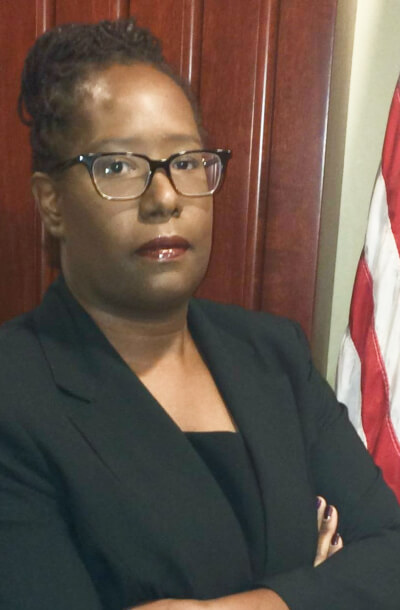
Heather C. Ford is the founder and Managing Attorney at Ford Injury Firm, a reputable Shreveport-based law firm focused on personal injury, traffic violations, and misdemeanor cases. A proud Louisiana native, Heather earned her bachelor’s degree in Chemistry from Dillard University before obtaining her Juris Doctor from Loyola University New Orleans.
At Ford Injury Firm, Heather leverages her extensive knowledge of Louisiana law to offer personalized and aggressive representation to clients facing a range of legal challenges. Whether dealing with the aftermath of car, truck, motorcycle, or pedestrian accidents, or addressing traffic-related charges such as speeding tickets and DUI/DWI offenses, Heather is dedicated to protecting her clients’ rights and securing the best possible outcomes.